
Understanding the Core GFRP Rebar Disadvantages
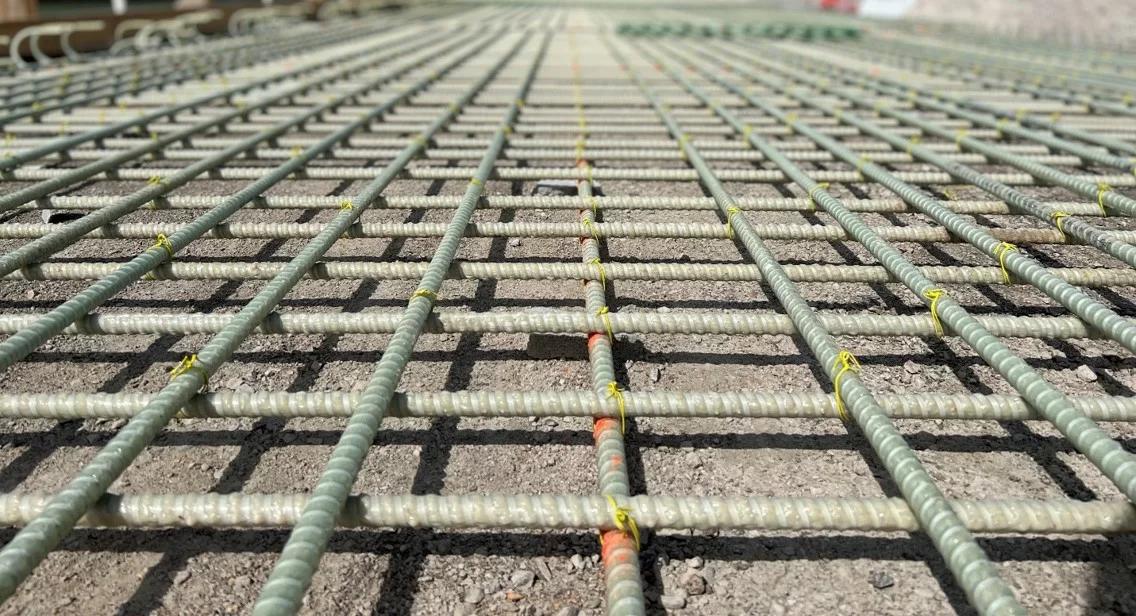
In my years working on coastal infrastructure projects across India, I have seen many engineers get excited about the corrosion resistance of GFRP. However, we must be pragmatic. The primary gfrp rebar disadvantages stem from its material behavior: it is linear-elastic until failure. Unlike steel, which yields and provides a warning through visible deformation before collapse, GFRP is brittle. It does not possess a plastic plateau.
This fundamental difference dictates our design approach. When using GFRP, we cannot rely on the traditional moment redistribution methods we use with ductile steel. Instead, we must follow design codes like ACI 440.1R to ensure our designs are tension-controlled, forcing concrete crushing before the rebar ruptures. From a site perspective, this means your safety factors for live loads become much more critical.
Beyond the brittle nature, there are specific design constraints to keep in mind:
- Modulus of Elasticity: GFRP has a lower modulus than steel, often leading to higher deflection in serviceability limit states.
- Thermal Expansion: The coefficient of thermal expansion is different from concrete, particularly in the transverse direction, which requires careful spacing calculations.
- Field Modifications: You cannot bend these bars on-site. If you need a specific hook or bend, it must be factory-manufactured to GFRP rebar specifications.
Honestly, the biggest headache I see on sites is contractors trying to treat it like TMT steel. You cannot weld it, and you certainly cannot use standard magnetic locators to find it once the pour is done. If you ignore these constraints, you are setting the structure up for failure, regardless of how well the material resists salt spray.
The Challenge of Limited Ductility in GFRP Reinforcement
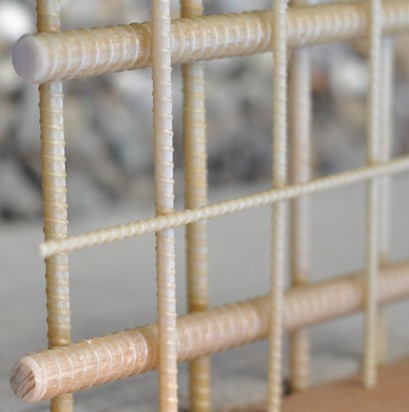
In my years overseeing site execution across India, the most significant shift for design engineers is moving away from the ductile behavior of steel. Unlike steel, which yields and provides visible warning signs like cracking or deflection before failure, GFRP exhibits linear-elastic behavior right up to the point of rupture. This lack of ductility is one of the primary gfrp rebar disadvantages you must account for during the structural design phase.
Because there is no plastic deformation, a sudden, brittle failure is a real concern if the design is not handled correctly. This is why we strictly follow the guidelines set out by the American Concrete Institute in ACI 440.1R. The standard requires us to apply higher safety factors and design for a “concrete-crushing” failure mode rather than a “rebar-rupture” mode. Essentially, we force the concrete to fail first, which provides the necessary warning signs that the structure is overloaded.
Honestly, this shift requires a complete rethink of how we calculate reinforcement ratios. While it might seem like extra work, it ensures that your structure remains safe despite the material’s inherent properties. For those comparing long-term project viability, understanding these mechanical differences is just as critical as analyzing the GFRP vs steel rebar cost comparison for your procurement planning. Always remember: in a GFRP-reinforced section, the strength must be significantly higher than the service load to compensate for the absence of yield-based warning.
Thermal Sensitivity and Fire Resistance Considerations
When evaluating GFRP rebar disadvantages, the most critical technical constraint is its performance under extreme thermal loads. Unlike carbon steel, which maintains structural integrity until it reaches its softening point at very high temperatures, GFRP relies on a polymer matrix—typically vinyl ester or epoxy—that softens at the glass transition temperature (Tg). Typically, the Tg for structural GFRP ranges between 100°C and 120°C. Once this threshold is crossed, the bond between the glass fibers and the resin degrades rapidly, leading to a significant loss of stiffness and load-carrying capacity.
On site, I have seen engineers mistakenly treat GFRP like steel during fire-rating calculations. You cannot simply ignore the thermal coefficient of expansion; the polymer matrix is more sensitive to heat. To mitigate this, adhering to strict concrete cover requirements is non-negotiable. According to ACI 440.1R guidelines, maintaining adequate cover acts as a thermal barrier, protecting the bars from direct flame exposure and rapid temperature spikes. While the material is inherently non-combustible in terms of flame spread, the structural degradation at elevated temperatures remains a design factor you must account for in your 12mm GFRP rebar specifications and overall fire safety strategy. Honestly, if your project involves high-risk industrial environments, you must ensure the concrete cover is increased beyond standard non-fire-rated requirements to preserve the integrity of the reinforcement.
Inability to Perform On-Site Bending or Modifications
One of the most significant gfrp rebar disadvantages for site engineers accustomed to traditional steel is the material’s thermoset nature. Unlike mild steel, which allows for ductility and cold bending on-site using a simple bar bender, GFRP rebars are cured in a factory setting. Once the resin matrix has hardened, the bar cannot be reshaped. If you attempt to heat or mechanically force a bend into a GFRP bar, you will compromise the integrity of the fibers and cause immediate structural failure.
This limitation necessitates a shift in project management. You must finalize your structural drawings and reinforcement schedules well before the procurement phase. All hooks, bends, and stirrups must be factory-manufactured to the required geometry. If your site team misses a detail or requires a last-minute modification, you cannot simply bend an existing bar; you must wait for a replacement, which can stall your schedule.
From my experience on-site, this requires a much higher level of discipline during the planning phase. When reviewing GFRP rebar specifications, ensure your ordering list includes every specific bend angle. In accordance with guidelines set by ACI 440.1R, designers must account for the fact that the strength of a bent GFRP bar is lower than that of a straight bar due to fiber continuity interruption at the bend. Honestly, the lack of field flexibility is the primary reason many contractors stick to steel for highly complex reinforcement cages.
Modulus of Elasticity and Structural Deflection Issues
One of the most critical GFRP rebar disadvantages engineers must account for is the material’s modulus of elasticity. Unlike steel, which typically offers a consistent modulus of 200 GPa, GFRP bars generally range between 40 GPa and 60 GPa, depending on the manufacturing process and fiber volume fraction. This lower stiffness directly impacts the serviceability limit states of a structure.
In practical terms, this means that for a given load, a GFRP-reinforced concrete member will experience greater deflection compared to an identical steel-reinforced element. When designing according to standards like ACI 440.1R, we cannot simply substitute steel area for GFRP area. You must perform rigorous deflection calculations, as the member’s reduced flexural stiffness often dictates the design rather than pure ultimate strength.
Honestly, I have seen site teams struggle when they try to apply traditional steel reinforcement ratios to GFRP projects. It leads to excessive cracking and sagging. Because the modulus is lower, crack widths also tend to be wider under service loads. You often need to decrease the spacing of the bars or increase the concrete cover depth to maintain serviceability requirements. While the material is excellent for corrosion resistance, ignoring these stiffness characteristics during the design phase is a recipe for failure. If you are balancing these design requirements against project budgets, it is helpful to review our life-cycle analysis to see how initial design choices impact long-term value.
FAQ: Common Questions About GFRP Rebar Limitations
Are GFRP bars better than steel?
It depends on the environment. While GFRP is immune to chloride-induced corrosion, it lacks the ductility of steel. If your project faces severe exposure, the life-cycle savings are significant, but you must account for its linear-elastic behavior up to failure.
What are the main gfrp rebar cons?
The primary gfrp rebar disadvantages include its inability to be field-bent, lower modulus of elasticity compared to steel (roughly 40-60 GPa), and sensitivity to high-alkaline environments if not manufactured with specific resin types. Honestly, the biggest site headache is the inability to adjust shapes on-site; what you order is exactly what you must install.
How do GFRP rebar specifications differ from steel?
Steel follows standard yield-strength metrics, whereas GFRP design is governed by ultimate tensile strength and strain limits as defined in ACI 440.1R. You cannot simply swap steel for GFRP based on area; you must perform a full structural re-design to satisfy serviceability requirements like crack width and deflection.
Can GFRP be used in all structural applications?
No, it is not a universal replacement. It is excellent for bridge decks and marine structures, but it is generally unsuitable for moment-resisting frames where ductility is critical for seismic energy dissipation. When planning your procurement, always cross-reference your structural requirements with the latest 12mm GFRP rebar price in India to ensure your budget accounts for both material and design adjustments.
Conclusion: Making Informed Reinforcement Choices
Transitioning from traditional steel to composite reinforcement requires a shift in engineering mindset. While the corrosion resistance of fiber-reinforced polymers is undeniable, you must weigh these against the GFRP rebar disadvantages, particularly the lower modulus of elasticity and the inability to perform field bends. In my experience on site, the ease of handling lightweight bars is fantastic, but the lack of ductility compared to steel means your structural design must be strictly serviceability-governed.
Before specifying these materials, engineers should consult the American Concrete Institute (ACI) guidelines, specifically ACI 440.1R, to understand the necessary adjustments in crack width and deflection calculations. Always verify the project requirements against local Bureau of Indian Standards (BIS) frameworks, as composite design codes are still evolving in our region.
Ultimately, the choice comes down to a project-specific life-cycle assessment. If you are evaluating the financial impact of this switch, our GFRP vs Steel Rebar Cost Comparison provides a practical look at how initial material costs balance against long-term maintenance savings. Do not rush the transition; perform a rigorous structural analysis, ensure your team understands the installation nuances, and always keep the design life of the structure at the forefront of your decision-making process.