
Understanding GFRP Rebar Sizes and Weights
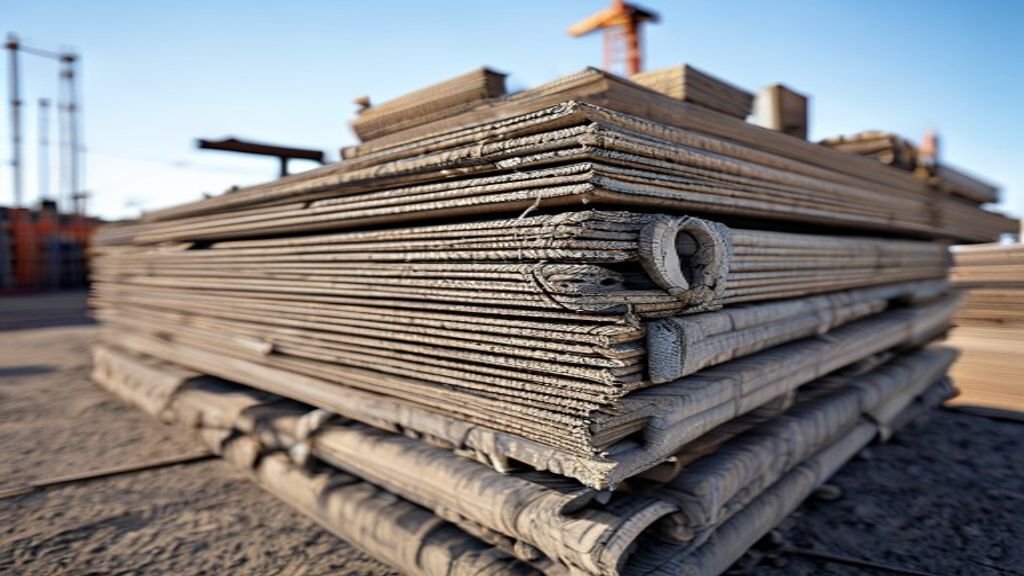
In my years managing site reinforcement, I have found that engineers often struggle to visualize the lightweight nature of composite bars. Unlike steel, GFRP rebar density is roughly one-fourth that of traditional reinforcement, which drastically simplifies logistics and site handling. When you reference a gfrp rebar sizes and weight chart, you are not just looking at dimensions; you are planning for significant reductions in dead load.
GFRP Rebar Weight Chart (kg per metre)
| Nominal diameter | Area (mm²) | GFRP weight (kg/m) | GFRP weight per 12 m bar (kg) | TMT steel weight (kg/m) | Weight saving |
|---|---|---|---|---|---|
| 6 mm | 28.3 | 0.059 | 0.71 | 0.222 | 73% |
| 8 mm | 50.3 | 0.106 | 1.27 | 0.395 | 73% |
| 10 mm | 78.5 | 0.165 | 1.98 | 0.617 | 73% |
| 12 mm | 113.1 | 0.238 | 2.86 | 0.888 | 73% |
| 16 mm | 201.1 | 0.422 | 5.06 | 1.58 | 73% |
| 20 mm | 314.2 | 0.660 | 7.92 | 2.47 | 73% |
| 25 mm | 490.9 | 1.031 | 12.37 | 3.85 | 73% |
| 32 mm | 804.2 | 1.689 | 20.27 | 6.31 | 73% |
GFRP weights calculated at ~2.1 g/cm³; actual weight varies ±5–10% with sand coating and resin content. Steel weights use d²/162. For current rates see the GFRP rebar price guide or request a quote.
Standard diameters typically range from 6mm to 25mm, adhering to guidelines found in ACI 440.1R. While nominal diameters are similar to steel, the mechanical properties—specifically the high tensile strength—allow for optimized designs. For instance, a 12mm bar often replaces a 16mm steel bar in non-corrosive environments. If you are calculating project budgets, remember that while the 12mm GFRP rebar price in India provides a baseline, total project savings are realized through lower shipping costs and faster installation speeds.
Here is a typical breakdown for standard bars:
| Nominal Diameter (mm) | Approx. Weight (kg/m) |
|---|---|
| 8 | 0.10 – 0.12 |
| 10 | 0.15 – 0.18 |
| 12 | 0.22 – 0.26 |
| 16 | 0.38 – 0.42 |
Honestly, the biggest adjustment for site teams is the lack of “heft” when carrying bundles. It feels unnatural at first, but the performance under tensile load is undeniable. Always ensure your procurement team verifies the specific fiber volume fraction, as this dictates the exact weight and load capacity of the batch delivered to your site.
Standard GFRP Rebar Diameter Specifications
When reviewing a gfrp rebar sizes and weight chart, it is critical to understand that these bars are not a direct, diameter-for-diameter replacement for carbon steel. In my field experience, simply matching the nominal diameter often leads to design errors. Instead, we refer to ACI 440.1R guidelines, which dictate that GFRP bars are sized based on their tensile capacity and modulus of elasticity relative to the steel they replace.
Standard production typically ranges from 6mm to 32mm. While 12mm is the most common size for residential and light commercial projects, larger diameters are increasingly used in bridge decks and marine infrastructure. Below is how these diameters generally align with steel equivalents:
- 6mm – 10mm: Often used for temperature reinforcement or secondary elements.
- 12mm – 16mm: Frequently serves as a functional replacement for 10mm to 12mm steel, depending on load requirements.
- 20mm – 32mm: Specified for heavy-duty structural applications.
Honestly, the most common mistake I see on-site is treating a 12mm GFRP bar as having the same stiffness as 12mm steel. Because GFRP has a lower modulus of elasticity, you often need to adjust your reinforcement ratio to control serviceability limits like deflection and crack width. Before finalizing your procurement, I recommend checking the specific 12mm GFRP rebar specifications to ensure your project’s performance requirements are met, as the material properties vary by manufacturer and resin type.
Comprehensive GFRP Rebar Weight Chart
When planning reinforcement schedules, the most striking advantage of using composite materials is the sheer reduction in dead load. While traditional steel rebar maintains a standard density of approximately 7.85 kg/m per 1000mm² of cross-sectional area, GFRP density typically ranges between 1.9 and 2.1 g/cm³. This enables a significant reduction in handling costs and site logistics. Below is a standard reference for our gfrp rebar sizes and weight chart, aligned with industry practices found in ACI 440.1R guidelines.
| Nominal Diameter (mm) | Cross-Sectional Area (mm²) | Weight (kg/m) |
|---|---|---|
| 8 | 50.3 | 0.11 |
| 10 | 78.5 | 0.17 |
| 12 | 113.1 | 0.24 |
| 16 | 201.1 | 0.42 |
| 20 | 314.2 | 0.66 |
Honestly, watching a site crew lift a bundle of 16mm GFRP bars with one hand—something impossible with steel—is a real eye-opener for project managers. Beyond the weight savings, understanding the 12mm GFRP rebar price in India and its specific load-bearing capacity is vital for accurate estimation. Always remember that while these bars are lighter, their modulus of elasticity is lower than steel, so you must adjust your deflection calculations accordingly. This physical difference is why we emphasize proper design checks before switching materials on-site.
Technical Properties and Structural Equivalence
When selecting the right reinforcement, understanding that GFRP rebar specifications differ fundamentally from traditional steel is critical for any structural design. Unlike steel, which is ductile and exhibits a distinct yield point, GFRP bars are linear-elastic until failure. This means they do not yield; they maintain their strength until they snap. Because of this, when you review a gfrp rebar sizes and weight chart, you will notice we often select bars based on tensile strength rather than cross-sectional area alone.
The modulus of elasticity for GFRP is typically around 40-60 GPa, which is significantly lower than the 200 GPa of steel. In practical terms, this means that for serviceability-limited designs like slabs or bridge decks, you might need to increase the bar diameter to control deflection. However, the ultimate tensile strength of GFRP often exceeds 1000 MPa, far surpassing standard Fe500 steel.
For design guidance, I always refer to ACI 440.1R, which provides the necessary frameworks for calculating development length and deflection limits when substituting these materials. Honestly, while the higher initial material cost is often a point of discussion, the long-term durability in corrosive environments like coastal India makes the engineering math work in favor of GFRP. Just remember, you cannot simply swap steel for GFRP on a 1:1 diameter basis without verifying your crack width and deflection calculations first.
Applications and Performance Benefits of GFRP Bars
In my field experience across coastal infrastructure and industrial projects, the primary advantage of GFRP bars is their inherent immunity to chloride-induced corrosion. While traditional steel rebar inevitably oxidizes in harsh environments, GFRP provides a maintenance-free alternative for bridge decks, marine jetties, and chemical processing plants. When consulting a gfrp rebar sizes and weight chart, it is vital to remember that selecting the correct diameter is not just about tensile load; it is about ensuring the long-term structural integrity of the concrete cover.
The performance benefits are best understood through established standards like ACI 440.1R. Because GFRP has a lower modulus of elasticity compared to steel, we often design for serviceability limits like crack control rather than just ultimate strength. Honestly, most site engineers initially struggle with the deflection calculations, but the trade-off is a structure that won’t require spalling repairs after a decade.
Typical applications include:
- Marine Structures: Sea walls and harbor piers where salt spray destroys steel within years.
- Chemical Plants: Foundations exposed to acidic or caustic spills.
- Bridge Decks: Reducing concrete cover requirements and eliminating epoxy-coating failures.
Before finalizing your procurement, I always advise engineers to evaluate the project’s life-cycle cost, as detailed in our guide on GFRP vs steel rebar cost comparison. While the initial investment might appear higher than mild steel, the absence of future rehabilitation costs makes it a prudent engineering decision for critical infrastructure.
FAQ: Common Questions About GFRP Reinforcement
What is the HSN code for GFRP rebar?
GFRP rebar is typically classified under the HSN code 7019, which covers glass fibers and articles thereof. When ordering, ensure you verify the specific sub-classification with your supplier, as it may vary slightly based on the resin composition and manufacturing process.
How does GFRP vs steel rebar strength compare in real-world loads?
GFRP bars offer a higher tensile strength compared to conventional steel, often exceeding 1000 MPa, but they exhibit a linear-elastic behavior until failure without yielding. While this makes them excellent for corrosion-prone environments, you must account for their lower modulus of elasticity in your structural design, as per ACI 440.1R guidelines. Honestly, I have seen too many engineers try to swap steel for GFRP on a one-to-one basis without checking deflection; that is a dangerous mistake.
What is the typical fiberglass rebar price per foot?
In the Indian market, the price is generally quoted per meter or by weight, but when converted, the fiberglass rebar price per foot typically ranges between ₹25 to ₹60, depending on the diameter and volume ordered. For a detailed breakdown of how these costs impact your project budget, you can review our GFRP vs steel rebar cost comparison. Always remember that while upfront costs might seem higher than mild steel, the lifecycle savings in maintenance-free structures often justify the investment.
Where can I find a reliable gfrp rebar sizes and weight chart?
You can find our comprehensive reference data earlier in this article. Always refer to manufacturer-specific datasheets, as the exact weight per meter will fluctuate based on the glass-to-resin ratio.
Conclusion: Selecting the Right GFRP Size for Your Project
Accurate material estimation is the backbone of any successful construction project. Relying on a reliable gfrp rebar sizes and weight chart prevents site-level errors, such as ordering incorrect cross-sectional areas that fail to meet load-bearing requirements. While the high tensile strength of GFRP often allows for smaller diameters compared to traditional steel, you cannot simply substitute sizes without a proper structural analysis.
Before finalizing your procurement, always consult with your structural engineer to verify that your design complies with industry standards like ACI 440.1R or relevant local IS codes. You must also account for the specific bond strength and serviceability limits of fiberglass, as these differ significantly from steel. If you are still evaluating the economic feasibility, I recommend reviewing our GFRP vs Steel Rebar Cost Comparison to understand the long-term lifecycle benefits versus the initial material investment. Honestly, the most common mistake I see on-site is engineers ignoring the differences in modulus of elasticity, which can lead to excessive deflection if not properly calculated during the design phase. Always prioritize performance data over price alone, and ensure your final specifications align with the structural drawings before placing an order.